 Why We Sleep
Introduction
There’s a lot of great content covered about sleep: circadian rhythm, melatonin, chronotype, how sleep deprivation is a debt that cannot be recovered, and what REM and non-REM sleep do to our brain and neuroplasticity. Here I want to summarize what we can do to improve our sleep. See these notes for more details. I found out about this book from Gates’ Notes. Also, these notes summarize the book really well.
Google Talk: a good short summary
Science of Sleep
Our Circadian Rhythm
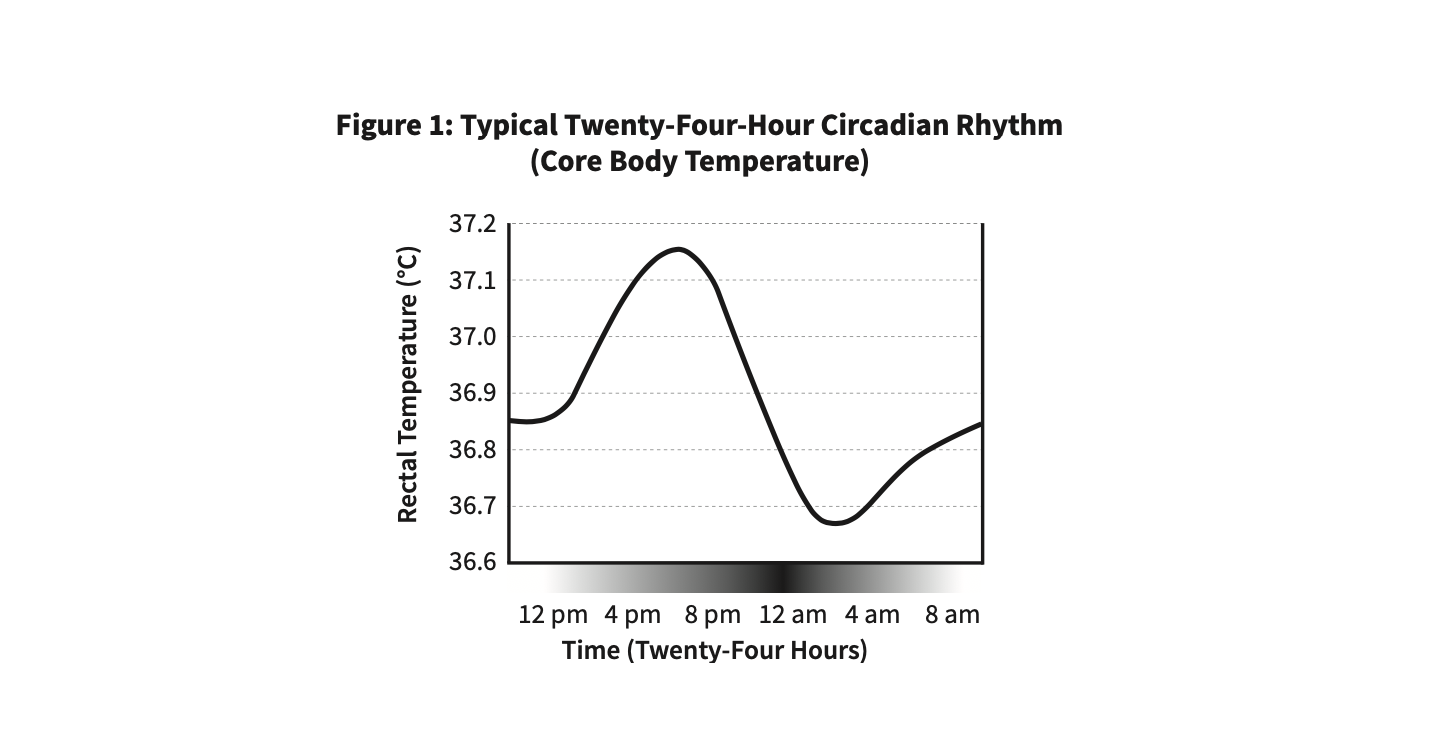
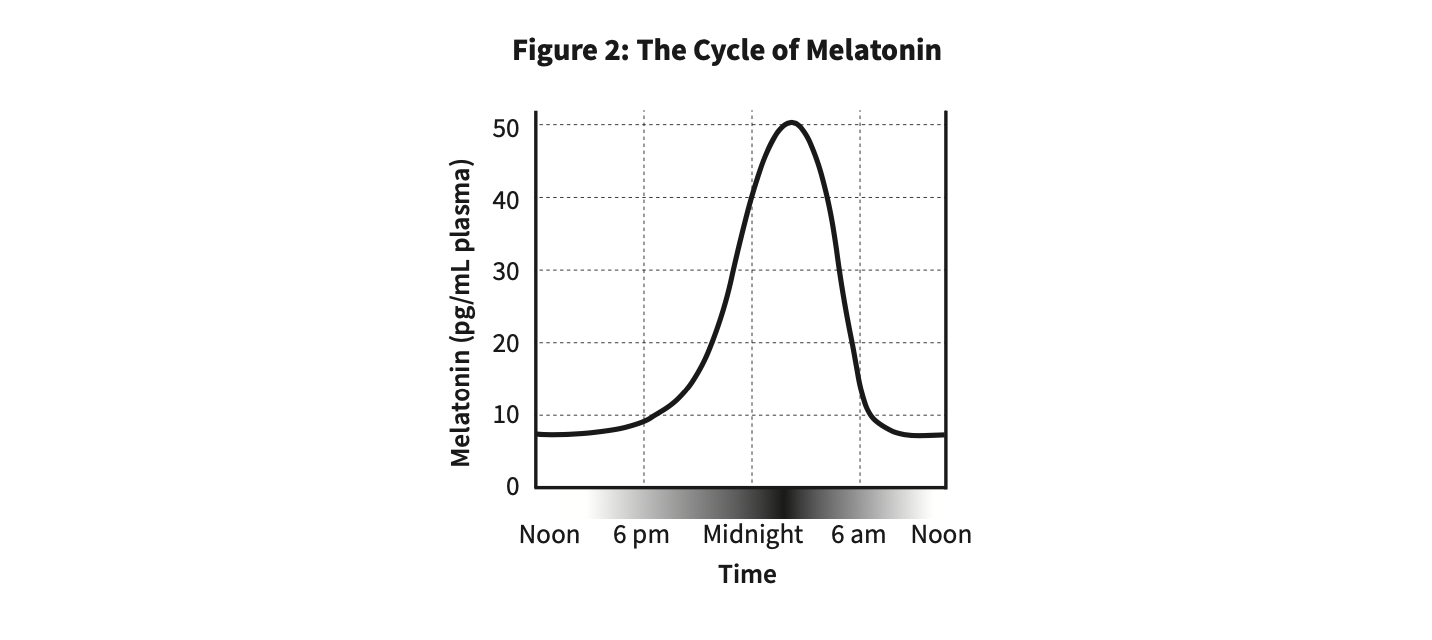
Our Melatonin Cycle
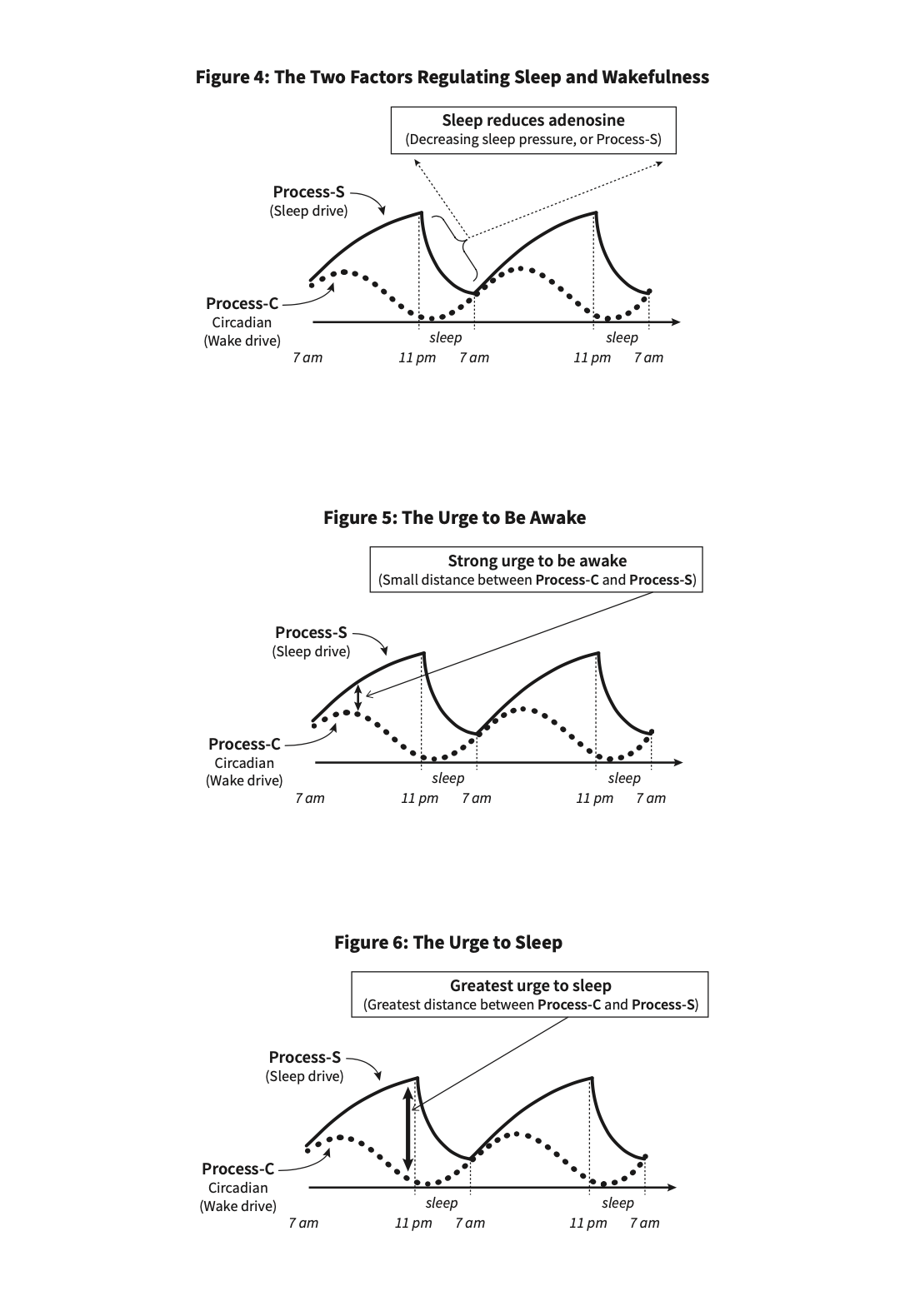
The Two Factors That Drive Sleep
There are two systems controlling sleep and wakefulness. The circadian system follows the day/night cycle, making you tired in the evening and alert in the morning (the exact timings vary by person, making some people “night owls” and some “morning larks”). In addition, “sleep pressure” is controlled by adenosine, which builds up while you’re awake and is cleared away during sleep. Caffeine works by temporarily blocking adenosine receptors, but doesn’t prevent it from continuing to build up.
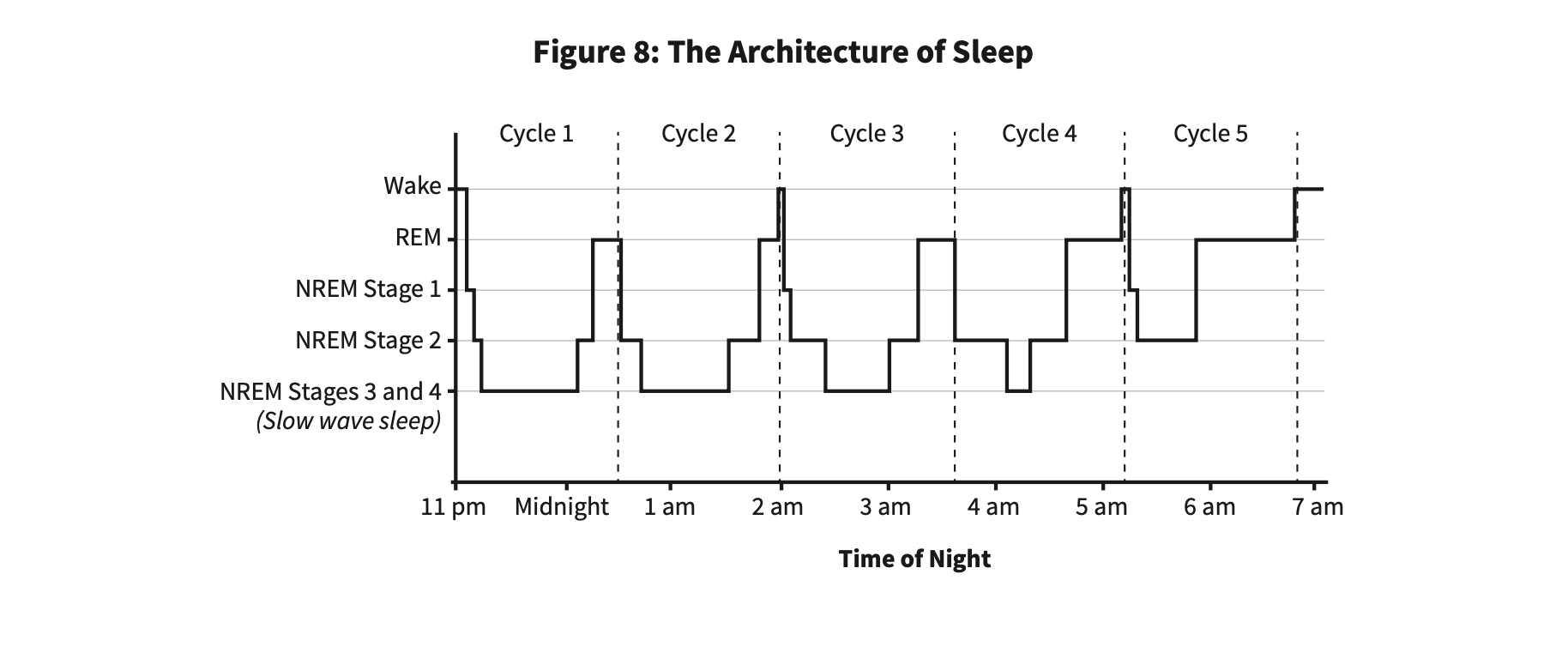
The Typical Sleeping Pattern
- Humans seem to be naturally biphasic: modern hunter-gatherer tribes sleep for 7-8 hours at night, and then nap for 30-60 minutes in the afternoon. It’s biologically natural to be sleepy after lunch. Biphasic sleep significantly decreases mortality from heart disease.
- Walker hypothesizes that descending from the trees to sleep on the ground + the invention of fire (which made it safer to sleep on the ground) allowed us to gain more REM sleep (particularly difficult in trees due to sleep paralysis), and therefore was important in boosting human cognitive development, which created a virtuous cycle for humans to be dominant.
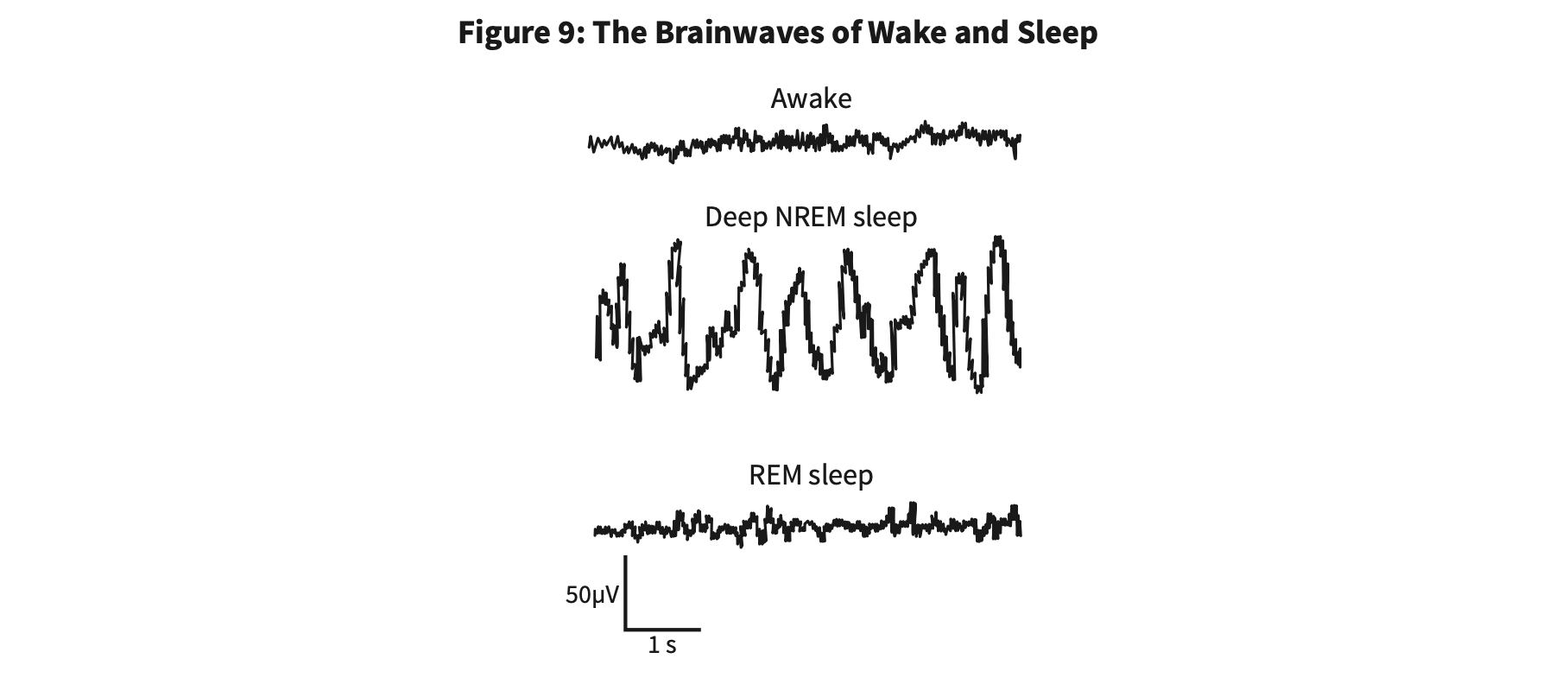
- Human sleep consists of cycles lasting about 1.5 hours, each of which contains first a period of NREM (Non-Rapid Eye Movement) sleep, then a period of REM sleep. In brain scans, the former consists of slow, deep brain waves, while the latter shows the same frenetic activity as an awake brain. As the night goes on, cycles feature a higher proportion of REM sleep. This means that if you cut your sleep short by 25%, you’re actually missing out on somewhere between 60% and 90% of REM sleep.
What Are NREM vs. REM Sleep Good For?
Walker’s theory is that NREM sleep is used to prune away unnecessary connections, while REM reinforces useful connections. He uses the analogy of a sculptor who alternates between carving away whole chunks of marble (NREM) and then adding fine detail on whatever’s left (REM). From this perspective, it makes sense that REM sleep is concentrated in later cycles. However, it’s unclear whether this is the scientific consensus.
NREM Sleep
- The slow waves of NREM sleep are useful for transferring memories from one part of the brain to the other — in particular, from short- to long-term storage.
- There’s a very strong link between NREM sleep and memory. The formation of long-term memories suffers if we don’t get enough sleep (even several days after the events we want to remember). This is true both for memories about facts and experiences and for “muscle memory” of actions like playing an instrument. When sleep-deprived, we also have worse short-term memory.
REM Sleep
- REM sleep is when the majority of dreams happen. While it’s uncommon for dreams to replay events from our everyday lives, they do often reflect our emotional preoccupations. To prevent ourselves from flailing around during dreams, we enter a state of sleep paralysis, where our brains are unable to control our voluntary muscles. Eyes are an exception — hence the name REM.
- REM sleep is important in emotional regulation and creativity. After sleep deprivation, the responses of the amygdala (responsible for strong emotions) can be amplified by over 60%, due to weakened links between it and the prefrontal cortex (responsible for “rational” decision-making).
- Dreams during REM sleep allow us to make unusual and creative connections between different topics — many great intellectuals report that their best ideas just “came to them” upon waking. REM sleep promotes the formation of neural links in infants, who have far more neural connections than adults. It is also important for their language learning.
The Trouble of Not Enough Sleep
See this TED Talk.
- Sleep deprivation massively reduces our ability to concentrate. In addition to slower reaction times, when tired we lapse into “micro-sleeps” during which we’re totally unresponsive. Walker emphasizes that tiredness is a far bigger cause of traffic accidents than drunk-driving, that drivers systematically underestimate how tired they are, and that drivers who micro-sleep often don’t brake at all before collisions.
- In the long term, sleep deprivation increases the risk of Alzheimer’s (since toxins are flushed from the brain during sleep), heart attacks (by provoking a stress response from the sympathetic nervous system and raising blood pressure) and cancer (by devastating the immune system). All of these seem to be very big effects — e.g. sleep-deprived patients are twice to three times as likely to suffer calcification of their coronary arteries.
- Sleep is also linked to many mental illnesses — e.g. sleep deprivation triggers mania or depression in bipolar patients. Most mental illnesses disrupt sleep, which exacerbates their other negative effects.
Tips for Good Sleep
1. Stick to a sleep schedule
We should aim to go to bed and wake up at the same time each day. People generally have a hard time adjusting to changes in sleep patterns. Unfortunately, sleeping late on weekends doesn’t make up for poor sleep during the week. If necessary, set an alarm for bedtime. Walker emphasizes this is the #1 priority from the list.
2. Don’t exercise too late in the day
Exercise is great, and we should try to exercise at least 30 minutes on most days. But try to time it no later than 2-3 hours before bed. This is related to his point that to sleep well, our body temperature needs to drop by 2-3 degrees. Keep the room temperature at 65°F or 18°C for a good night’s sleep.
3. Avoid caffeine & nicotine
Colas, coffee, teas (that aren’t herbal) and chocolate contain caffeine, which is a stimulant. Even consuming these in the afternoon can have an effect on your sleep. Caffeine has a half-life of 5 to 7 hours, so if you drink it in the afternoon, a significant amount will still be in your system at bedtime.
4. Avoid alcoholic drinks before bed
The presence of alcohol in the body can reduce your REM sleep, keeping you in the lighter stages of sleep.
5. Avoid large meals and beverages late at night
A light snack before bed is okay, but a heavy meal can cause digestive issues, which interfere with sleep. Drinking too many fluids can cause frequent awakenings to urinate.
6. Avoid medicines that delay or disrupt your sleep
Some commonly prescribed heart, blood pressure or asthma medications, as well as some over-the-counter and herbal medicines for coughs, colds or allergies can disrupt sleep patterns. If you have trouble sleeping, it may be worth speaking to your doctor or pharmacist to see if any of the drugs you’re taking may be contributing to this. It may be possible to take them earlier in the day. Apparently sleeping pills cause lower-quality sleep and have severe long-term side-effects, so they should be avoided (with the exception of melatonin).
7. Don’t nap after 3pm
Naps are great, but taking them too late in the day can make it hard to fall asleep at night.
8. Make sure to leave time to relax before bed
It’s important to have time before bed to unwind. Try to schedule your days so that there is time to relax before bed.
9. Take a hot bath before bed
The drop in body temperature after a bath may help you to feel sleepy, and the bath can help you to slow down and relax before bed.
10. Have a dark, cool, gadget-free bedroom
We sleep better at night if the temperature in the room is kept on the cool side. Gadgets such as mobile phones and computers can be a distraction because the light they emit, especially the blue light, suppresses the secretion of melatonin — the hormone that regulates sleep/wake cycles, increasing in the evening to induce sleep.
A comfortable mattress and pillow can set you up for a good sleep. Those with insomnia will often watch the clock; turn it away from view so you don’t have to worry about the time while trying to sleep.
11. Get the right sunlight exposure
Sun exposure during the day helps us to regulate sleeping patterns. Try to get outside in the natural sunlight for at least 30 minutes per day.
12. Don’t stay in bed if you really can’t sleep
If you find yourself still in bed for more than 20 minutes, or you’re starting to get anxious in bed, get up and do something else until you feel sleepy. Anxiety whilst trying to sleep can make it harder to fall asleep. For serious sleep problems, Cognitive Behavioral Therapy for Insomnia (CBT-I) works fairly well and should be the first step.